
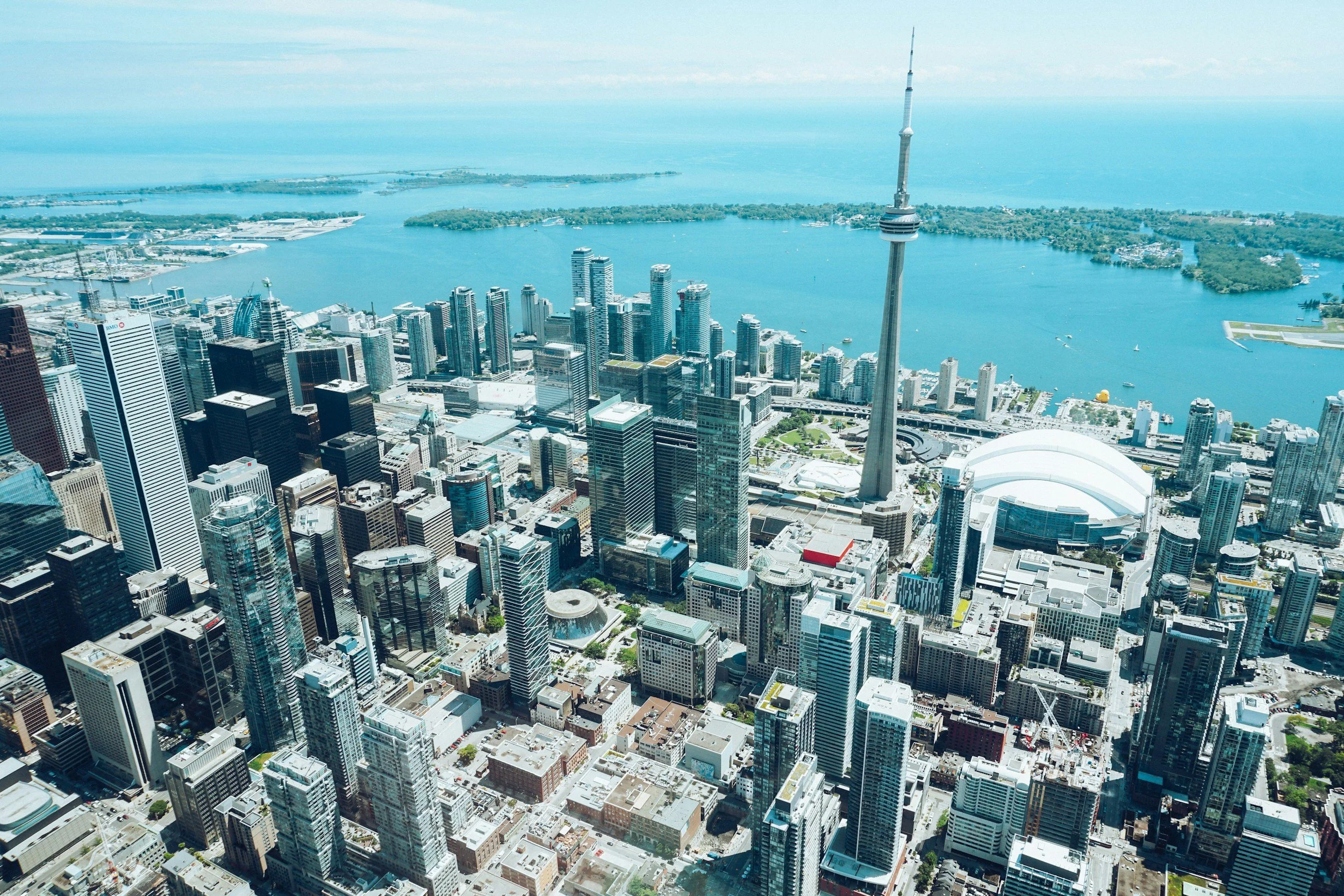
This post is based on my video published on November 11, 2025, using rental and sales data that was current at the time of recording. Rents, rates and fees change, so run your own numbers before you invest.
There was a time when buying a Toronto condo almost guaranteed you would make money. You could buy a pre-construction condo, sit on it for a couple of years, and by the time the keys were ready you had already made tens or even hundreds of thousands in equity. Or you could buy a resale condo, rent it out, and be cash flow positive from day one.
Those days are gone. And I am going to say something that might surprise people, especially coming from someone who has been investing in real estate since 2006: never invest in Toronto condos again. Before you start typing in the comments, hear me out. I have owned condos, lived in them, rented them and dealt with the tenants. But the numbers have completely changed.
In this post you will see exactly why condos no longer make sense for most investors, what the numbers actually look like on a real downtown condo, and what you can invest in to build long-term wealth.
Why condos were the go-to investment
Resale and pre-construction condos were the classic entry point for new investors, and for people who were very busy with work and family. You could buy a one-bedroom in a good area, rent it out and watch the value climb every year. It felt very doable. The reality now is that the numbers do not work anymore, from both an appreciation and a cash flow perspective.
A real-life example: a $600,000 downtown condo
I walk through this example using an analysis tool I built. It has three sections: the capital required to acquire the property, the cash flow of operating it, and the exit strategy when you sell. The example is a recent downtown sale at $600,000.
Part 1: the capital you need to buy it
Because it is an investment property, you pay both land transfer taxes, one to the city and one to the province. Add an appraisal, legal fees and title insurance, and the total purchase costs are just over $20,000. With a 20% down payment of $120,000, the total capital requirement to buy the $600,000 condo is about $140,000.
Part 2: the monthly cash flow
Using rental data current at the time of recording, a one-bedroom condo rents for about $2,300 a month. On the expense side:
Condo fees: $550 a month.
Property taxes: $2,800 a year, or about $233 a month.
Landlord insurance: $600 a year. This is the insurance you must carry as a landlord. Your tenant buys their own contents insurance, which is separate.
That puts the net income before the mortgage at about $1,466 a month. Now add the mortgage. With a 20% down payment, the mortgage is $480,000. I used a 5-year fixed rate of 4.5% amortized over 30 years, which gives a payment of $2,420 a month. Investors can choose a 25-year or a 30-year amortization. Stretching to 30 years improves cash flow, because a 25-year amortization pays down more principal and the payment jumps from $2,420 to $2,656. That takes the negative cash flow from about $950 a month to about $1,200.
To summarize the first two parts, you need $140,000 to get in, and you lose $953 a month on a 30-year amortization. That is money you bleed every month, over $11,000 a year.
Part 3: the exit strategy
Here is something I tell all my clients, and it is something I follow personally. Hold any property for a minimum of seven years, whether it is an investment or your own home. Seven years gives you time for mortgage paydown and appreciation to work. Since 2022 prices have come down, but over the long term real estate goes up and comes down, and the longer you hold, the better.
For appreciation I used 1% a year. My baseline for inflation is 2%, so I am being conservative given what has happened since 2022, and 1% is still generous because I am assuming nothing close to what we have seen in the last few years. At 1% a year, the $600,000 condo is worth $643,281 after seven years. I kept the mortgage at 4.5% for the full seven years for the analysis, which leaves a mortgage balance of $417,349. The equity is the difference, about $226,000.
Now the exit costs. Starting from the $643,000 selling price, you subtract real estate fees and legal fees. You also subtract the negative cash flow you funded out of pocket, which is $953 a month for 12 months over seven years, or about $80,000. I did not include a mortgage penalty, to keep things simple. The net proceeds come to about $267,686.
You put in $140,000, so your net profit before capital gains is about $127,500 over seven years. That might look okay on the surface, but you have to look at the big picture: what it costs to buy, what it costs to operate and what the exit looks like.
What this analysis leaves out
I kept the analysis simple, and a few things will change over those seven years. Rental income can increase or decrease with market conditions. If the building was built after November 15, 2018, it is not under rent control. Before that date, annual rent increases are set by the province. Meanwhile, maintenance fees and property taxes will increase. That is pretty much guaranteed, and it is not in the numbers above, so it would eat into that $127,500 profit. Hopefully rents rise to offset them, but that is hard to predict with the level of supply from new completions and existing condos for sale.
The three factors to evaluate any investment
From a business perspective, there are three factors to evaluate: the potential for appreciation, the upside of revenue, and your control over costs. The difference between revenue and expenses is your cash flow. The question is whether rental income has the potential to outpace expenses.
1. Appreciation is no longer there
Values have dropped since 2021, and it will take a while for condo values to rebound. We have record completions coming to market, and the last batch is due in 2026. Only when the supply of resale condos and newly completed condos is absorbed will values increase, and that might take a couple more years.
2. Cash flow is squeezed from both sides
With record supply of newly completed condos, and developers moving into purpose-built rentals, there is downward pressure on rents. On the expense side, condo fees and property taxes have increased significantly since 2020, wiping out cash flow. In the past three years alone, Toronto property taxes have increased by 23%, and maintenance fees are up around a dollar per square foot.
You have no control over maintenance fees, because of inflation, management costs and aging infrastructure. In the first few years of a newly completed project, fees rise sharply because the reserve fund must be funded under the provincial Condo Act. You cannot negotiate them. The more amenities a building has, such as a 24-hour concierge, a pool or a party room, the faster the fees rise. Buyers do not pay more for a condo because the building has lots of amenities. In fact, high maintenance fees can reduce the resale value because they scare off buyers. You are paying more every year for something that is working against your return.
3. You do not control a condo
When you own a condo, you are basically a minority shareholder in a corporation run by a board. You cannot decide when the roof gets replaced, you cannot choose the contractor and you cannot delay costs. If the board decides the windows need to be replaced as the building ages, every owner pays tens of thousands of dollars in special assessments. You write that cheque whether you like it or not.
With a freehold investment property such as a house, duplex or triplex, you choose who does the work, how much you are willing to pay and when to do it. Condos also limit your creativity and income potential. You cannot force appreciation by adding a basement suite or a garden suite or renovating to increase the rent. To a large extent your rental income is similar to the other units in the building, and you are entirely dependent on market demand for units in your building.
Condos are passive, but passive does not mean profitable
Some people will say condos are easier, with less work and hassle. That is absolutely true. Condos are passive. But passive does not mean profitable. If you are trying to build financial freedom and long-term wealth, you have to think like an investor, not a consumer.
What to invest in instead
Look for properties that give you control and cash flow. That means duplexes, triplexes and houses that can be converted into multiple units. When you buy one, you are buying the land and a structure you can improve. You are buying flexibility. You can renovate, add a unit, refinance and scale your portfolio. Yes, it takes more work and more capital, but you can create real equity and generate positive cash flow even in an expensive market like Toronto. If you improve the property, raise the rents and add another suite, the bank recognizes that in the appraisal. You cannot do that with a condo.
Land supply: Ground-level investment properties include the land. There is no more land to build on in Toronto. The only option is to build up, with higher density. Owning a condo is owning a box in the sky.
Exit strategy: Homes with a second suite attract a larger pool of buyers, including families, investors and first-time buyers who will use the rental income to qualify.
Cash flow: Cash is king. When you make positive cash flow every month, you decide when to sell. You are not forced into a difficult decision when the market is down. Positive cash flow gives you options and freedom, while negative cash flow takes them away and traps you.
The beauty of owning a paid-off duplex in the City of Toronto is that it can provide financial freedom toward your retirement.
Do condos have any place in the market?
Yes. I see three groups for whom a condo is a good option:
Downsizers. A couple approaching retirement who want something easier to maintain. No grass to cut, no snow to shovel, and they can lock the door and head south for the winter.
Families with a child at university in the city. At U of T, TMU or, to a certain extent, York University. Why pay rent for four years when the family can buy a condo, the student can live there, and the family builds some equity and hopefully gets some appreciation over that period?
Lifestyle buyers. A homeowner who does not have a car, works in the city and goes out in the city. A downtown condo provides a quality of life that makes complete sense for them.
What this means for you
Run the full numbers before you buy: capital required, monthly cash flow and exit strategy.
Plan to hold for at least seven years, and include the cash you will fund out of pocket if the property has negative cash flow.
Assume condo fees and property taxes will rise over time.
Focus on what you can control: properties that generate income and positive cash flow.
Frequently asked questions
Are Toronto condos still a good investment?
For most investors, not on the numbers. In my $600,000 downtown condo example, the investor puts in about $140,000 and loses about $953 a month on a 30-year amortization. Appreciation is not there right now, and rents face downward pressure from record supply.
How much does it cost to buy a $600,000 investment condo in Toronto?
In my example, it was about $140,000 in total: a $120,000 down payment plus just over $20,000 in land transfer taxes, appraisal, legal fees and title insurance.
Is a 25-year or 30-year amortization better for an investment property?
A 30-year amortization improves cash flow because the payment is lower. In my example the payment is $2,420 on 30 years versus $2,656 on 25 years, which takes the monthly loss from about $950 to about $1,200.
How long should I hold an investment property?
My advice has always been a minimum of seven years, so you get time for mortgage paydown and appreciation. That applies to an investment and to your own home.
What should I buy instead of a condo?
Look at duplexes, triplexes and houses that can be converted into multiple units. You control the land, the improvements and the rents, and positive cash flow gives you the freedom to decide when to sell.
Book a free consultation
If you want to learn how to find and evaluate Toronto investment properties that actually cash flow, I would love to chat, with no obligation and no pressure. Book a free consultation using the contact page.