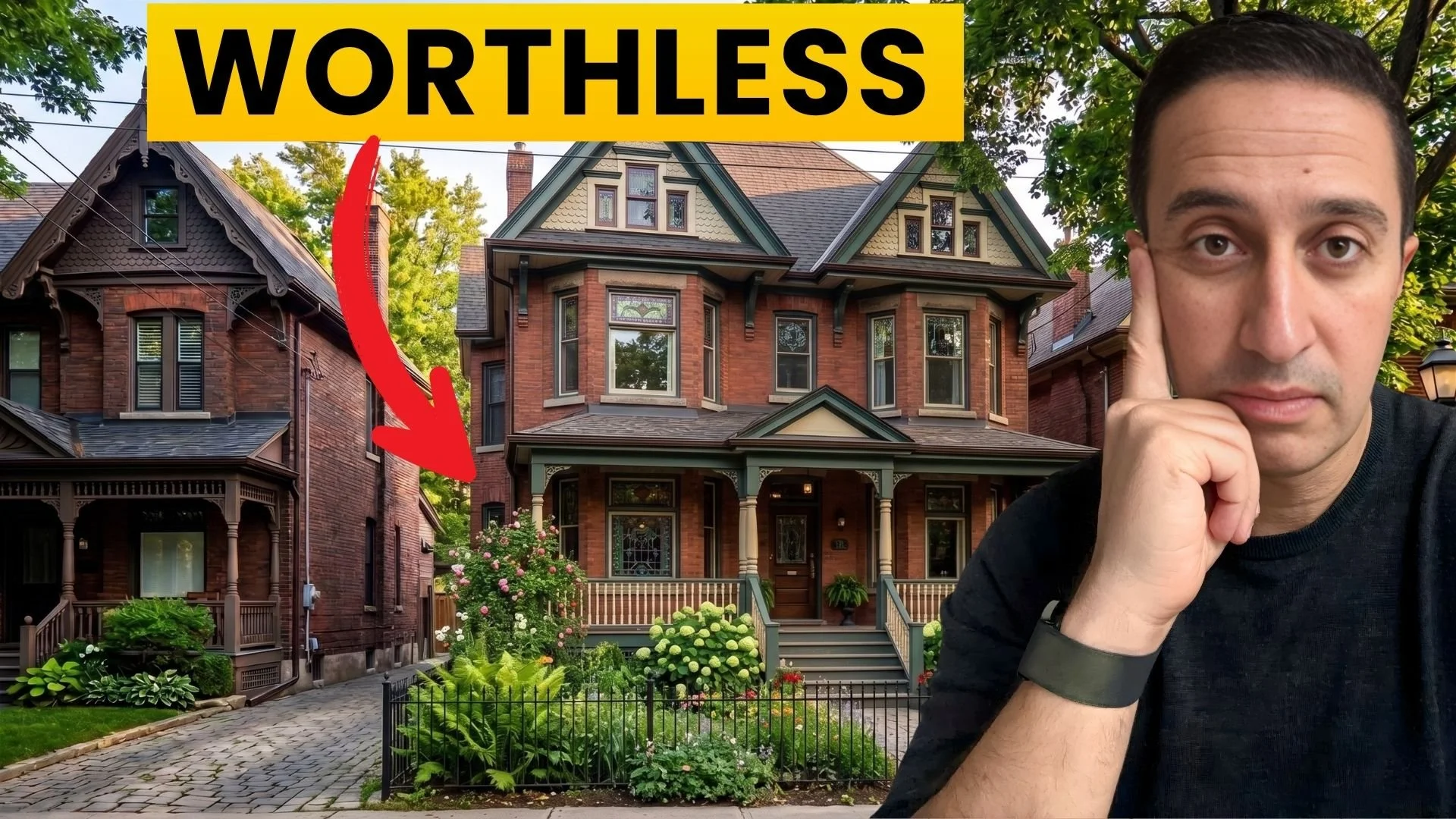
Certain houses in Toronto are sitting on the market for 90 plus days with zero offers because they have major compromises like a busy road location, outdated knob and tube wiring, or defective layouts. In the eyes of cautious 2026 buyers, these specific compromised homes have become practically worthless and completely frozen. While turnkey, move-in ready properties still sell, buyers now have choices and leverage. To make these homes sell, properties must be priced to reflect their physical or structural realities.
The Reality of the 2026 Toronto Housing Market
The current housing landscape in the city of Toronto is completely different from the peak of the market a few years ago. Back in 2021 or early 2022, a seller could put a for sale sign on a property, hold an offer night, and easily get multiple offers. The market was so starved for inventory that buyers were forced to ignore massive structural flaws just to get a foot in the door.
In 2026, the city of Toronto market has split into two distinct tiers. Turnkey, move-in ready homes are doing just fine, but if a house has even one major compromise, the market ignores it. Data from the Toronto Regional Real Estate Board reveals that the sales to new listings ratio has dropped to 36.1%. Anytime that ratio drops below 40%, the market is firmly in a buyer market. While the average house takes about 54 days to sell, compromised homes are sitting much longer.
Five Types of Toronto Houses Getting Punished
A dividing line exists in the local market. Five specific property types face severe penalties from buyers who refuse to take on unnecessary stress or costs.
1. The Busy Road Trap
Properties sitting directly on major busy streets like Bathurst, Keele, Eglinton, or Dufferin are practically dead in the water. During the peak market, buyers would compromise on traffic noise because they could not afford premium areas like High Park. Today, when buyers can look at five other homes on a quiet side street or a cul-de-sac in the same price range, they walk away from busy roads every single time.
Owning a home on a major four lane road carries a permanent location tax. In a balanced or buyer-leaning market, that tax is paid in the form of a price discount. Buyers simply do not want car noise in their living room or the nightmare of backing out of a driveway into morning rush hour traffic.
2. Homes Bordering Rail Corridors
The city of Toronto is carved up by train tracks, including GO Transit corridors, CP Rail lines, and CN freight lines. These tracks cut right through heavily populated neighbourhoods like the Junction, Davenport, Leslieville, and Riverdale. Metrolinx is constantly expanding and increasing the frequency of the GO Transit network, alongside the ongoing construction of the Ontario Line.
When a buyer stands in a backyard and feels the ground vibrate as a train rumbles past, they worry about future expansion. They wonder if there will be twice as many trains passing by their bedroom window in five years. This fear creates a wide value gap between rail bordering homes.
3. The Outdated Wiring Nightmare
Problematic wiring like active knob and tube or older aluminum wiring is common in older Toronto houses in places like the Annex, Bloor West Village, or Riverdale. Insurance companies have become incredibly risk-averse. Many major insurance providers will outright refuse to write a policy for a house with active knob and tube wiring.
If a buyer cannot get home insurance, their lender will not fund the mortgage. This turns a simple purchase into a financing nightmare where the buyer risks losing their deposit. Fixing this requires an electrician to rip open drywall, rewire the entire house, and get an Electrical Safety Authority certificate. In a standard Toronto two-story home, that is easily a $15,000 to $30,000 job that creates plaster mess and requires full repainting.
4. Obsolete or Defective Layouts
Defective layouts are a massive roadblock in today's cautious market. Examples include semi-detached homes where you must walk through the second bedroom to get to the third bedroom, houses with only one bathroom, or properties with drafty additions slowly sloping away from the main structure. In a hot market, people convinced themselves they could deal with these issues down the line.
In 2026, permits, construction, and labour costs in Toronto remain incredibly high. Ripping down an addition, relocating plumbing, or restructuring a floor plan is a massive financial undertaking. Buyers calculate the cost of fixing the layout, add a 30% to 40% buffer for surprises in older homes, and realize it is easier to buy a properly laid out property down the street.
5. Overpriced Homes Clinging to the Past
This is the single biggest reason homes sit on the MLS for over 90 days. Some sellers are still trying to play the 2021 game by listing their home significantly under market value, expecting crowds to show up on offer night and bid the price up by $200,000. When offer night arrives to complete silence, these sellers terminate the listing, relist it at their dream price, and refuse to budge.
This strategy leaves the home looking stale on the market with a history of termination. Buyers smell opportunity when a listing sits. Sellers end up chasing the market down and selling for less than if they had priced it realistically on day one.
The Playbook for Sellers
If you own a flawed property, you can still achieve a successful sale by adapting to current market realities.
First, obtain a pre-listing home inspection. Do not let the buyer find the knob and tube wiring or an active roof leak on their own. Find the issues first, get professional quotes to fix them, and present those quotes to potential buyers. Better yet, hire an electrician to fix the wiring defects before hitting the market to safeguard your sale.
Second, price the property right from day one. Look at recent comparable sales, deduct the actual cost of the flaw, and price it realistically. A home priced correctly for its flaws will still attract buyer attention and sell.
The Golden Era for Buyers
For years, buyers were pushed around, forced to submit firm offers with no conditions, and told to pay way over the asking price. The current market presents an excellent opportunity to get deep discounts.
If you have a reliable contractor, look for homes that have been sitting for over 90 days due to a bad layout or outdated wiring. Write an offer with clear conditions for financing, home inspection, and home insurance. Take the estimated cost of rewiring or repairing the house, double it and knock that entire amount off your offer price. Stressed sellers are often willing to say yes just to move on with their lives. No home in Toronto is truly worthless, everything sells when the price matches the reality of the property.