
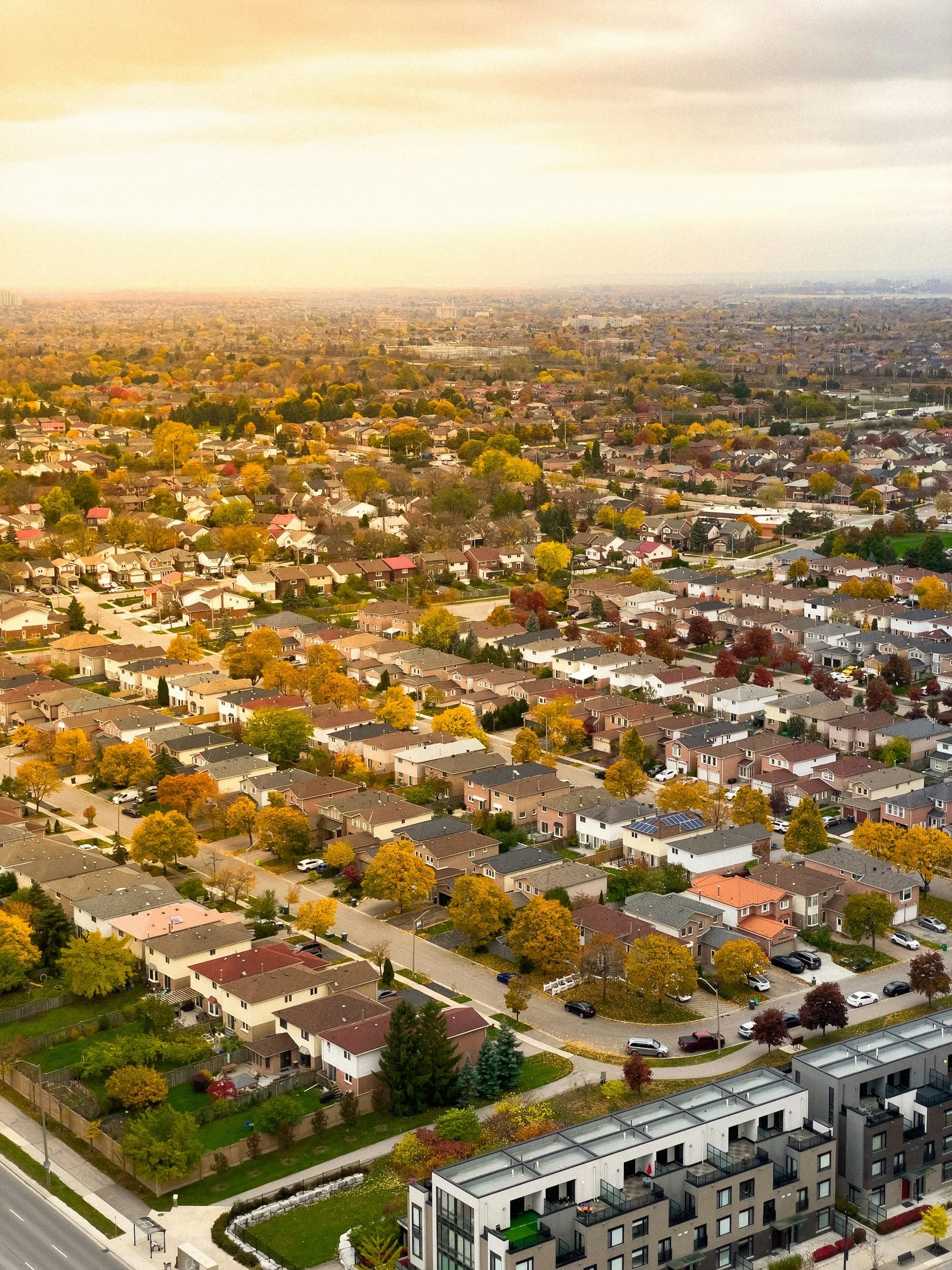
This post is based on my video published on January 21, 2026 and on City of Toronto (416) market data from 2024 and 2025. Market conditions change, so confirm current numbers and the legal details of any property with your lawyer before you buy.
If you have been tracking Toronto's real estate market over the last 12 months, you have probably noticed a significant gap between the number of homes listed and the number of homes actually selling. In the 416 specifically, nearly as many listings are being withdrawn as are being sold. That has created a lot of noise, and frankly a lot of confusion, for both buyers and sellers.
In this post I want to look at the actual data in the City of Toronto, explain why townhouses have become the middle market everyone is watching, and show you how to tell which ones to buy and which to avoid so you do not lose hundreds of thousands of dollars. I will finish with three action steps if you are contemplating a move in the next few months.
The numbers tell a very specific story
If we look at the 2024 and 2025 data, Toronto's transaction volume has stayed consistently lower than the 10-year average. We are not seeing a lack of interest. We are seeing a difference in expectations between sellers and buyers.
In the 416 there were about 32,000 terminated listings in 2025. That happens when a seller enters the market with 2021 or 2022 expectations and the market does not respond. This standoff is what makes inventory look high on paper while the number of quality options remains relatively tight.
If you are a buyer, the challenge is not finding a home. It is finding a seller who has accepted today's market value. If you are a seller, the challenge is making sure your home does not become a stale listing.
Why sellers become comparables for someone else
Here is an example. Say there are 200 active townhouse listings and only 50 sell. That means one out of four sells, while the other three sit, get relisted or get price adjusted. Those three unsold townhouses become the comparables that help the one sold. Sellers need to position themselves to be the one that sells, not to become a comparable that helps another home sell.
Why townhouses are the pivot point
Townhouses represent an interesting pivot point in the Toronto market. Many condo owners have outgrown their 600 square foot units, but a semi-detached home at around $1.5 million in neighbourhoods like Riverdale or High Park is out of reach. The townhouse is the natural next step if they want to stay in the city.
The catch is that a townhouse in Toronto can mean three very different financial structures. This is where I see people make the most mistakes in their planning. When you look at listings in areas like Liberty Village, The Junction or North York, look beyond the number of bedrooms and the list price. Look at the legal structure of that specific property.
The three types of townhouse ownership
Traditional freehold. You own the land and the structure. These are the gold standard for long-term appreciation in Toronto, because you have full control over your costs.
Condo townhouse. You own the interior, but the exterior envelope of the building and the land are managed by a corporation, and you pay monthly maintenance fees to the condo corporation.
Parcel of tied land (POTL). This is a hybrid. You might own the house, but you pay a monthly fee for common elements such as a private roadway or a shared parkette.
Understanding these differences is the first step in moving from browsing to making an informed decision.
The math behind monthly fees
This is where your actual monthly cost of living is determined. Buyers can get excited about a townhouse in the 416 that is priced below a million dollars, but when you look closer, that supposedly cheaper unit may have $650 a month in maintenance fees. That $650 a month is equivalent to roughly $125,000 to $140,000 of mortgage debt. In other words, a condo townhouse priced around $875,000 can cost the same as a $1 million freehold townhouse.
The difference is that a freehold townhouse can be paid off. With a condo townhouse you will always have maintenance fees to pay, even after the mortgage is gone, and keep in mind that condo fees always go up.
Layout and resale value
In the City of Toronto we have seen a rise in stacked townhouses. They are great for entry-level buyers, but you have to be aware of resale value. A unit with three flights of stairs might feel claustrophobic, and the pool of future buyers is limited to a very specific demographic. On the flip side, a wide townhouse that feels more like a semi-detached is always in high demand, because it appeals to young families and downsizers alike.
Three action steps before you make a move
Compare days on market with total days on market. Because of the termination trend, a listing might say two days on market but may have been listed three times before. Ask your agent for the property history. It tells you how motivated the seller really is.
Review the status certificate. If a property has any maintenance fee, you want to understand the health of the condo corporation. Some older townhouse complexes face special assessments for roof or window replacements. You want to know before you are emotionally invested in the unit.
Focus on the 416 core. While the suburbs often see more dramatic price swings, the Toronto core tends to be more resilient during these inventory shifts. If you can afford to stay within the city limits, close to transit and highway access, your downside is better protected.
A market in transition
The Toronto market is in a period of transition, which creates a lot of opportunity. It is no longer about bidding wars and blind offers. It is about due diligence and clear-headed negotiation. Buyers who understand the legal structure of what they are buying, the true monthly cost and the history of the listing will make better decisions than buyers who only compare list prices.
What this means for you
High inventory on paper does not mean lots of quality options, because many listings are terminated and relisted.
Sellers who price for 2021 expectations end up as comparables for the homes that sell.
Always check whether a townhouse is freehold, condo or POTL before you compare prices.
Convert monthly fees into mortgage dollars to see the real cost of a cheaper-looking unit.
Ask for the property history and read the status certificate before you get emotionally attached.
Frequently asked questions
Why are so many Toronto listings terminated?
Many sellers list with 2021 or 2022 price expectations and the market does not respond. In the 416 there were about 32,000 terminated listings in 2025, which is why inventory looks high on paper while quality options stay tight.
What is the difference between a freehold, condo and POTL townhouse?
Freehold means you own the land and the structure. A condo townhouse means a corporation manages the exterior and land and you pay monthly fees. A parcel of tied land is a hybrid where you own the house but pay a monthly fee for common elements such as a private road or shared parkette.
How do maintenance fees affect what I can afford?
A $650 monthly fee is roughly equal to $125,000 to $140,000 of mortgage debt, so a condo townhouse priced under a million can cost as much each month as a more expensive freehold home. Condo fees also keep rising and never end, even after the mortgage is paid off.
Are stacked townhouses a good buy?
They can suit entry-level buyers, but three flights of stairs and tight layouts limit the pool of future buyers. A wider townhouse that feels like a semi-detached tends to hold demand with young families and downsizers.
Why focus on the 416 core?
The suburbs often see more dramatic price swings, while the city core tends to be more resilient during inventory shifts, especially close to transit and highway access.
Book a free consultation
If you want a personalized approach to your next move in the Toronto market, I would be happy to talk. Book a free consultation using the contact page.